What the progeny trial taught us
The Beef + Lamb New Zealand Dairy Beef Progeny Test gave Lowland Park something especially valuable: independently collected information showing how progeny from a New Zealand-bred Australian Lowline sire performed alongside those from larger beef breeds under the same commercial conditions.
We have used the results as a practical guide—not as a verdict on the whole breed. They reinforced the value of carcase quality and moderate frame, while also showing us where careful selection for growth, structure and finishing ability is essential.
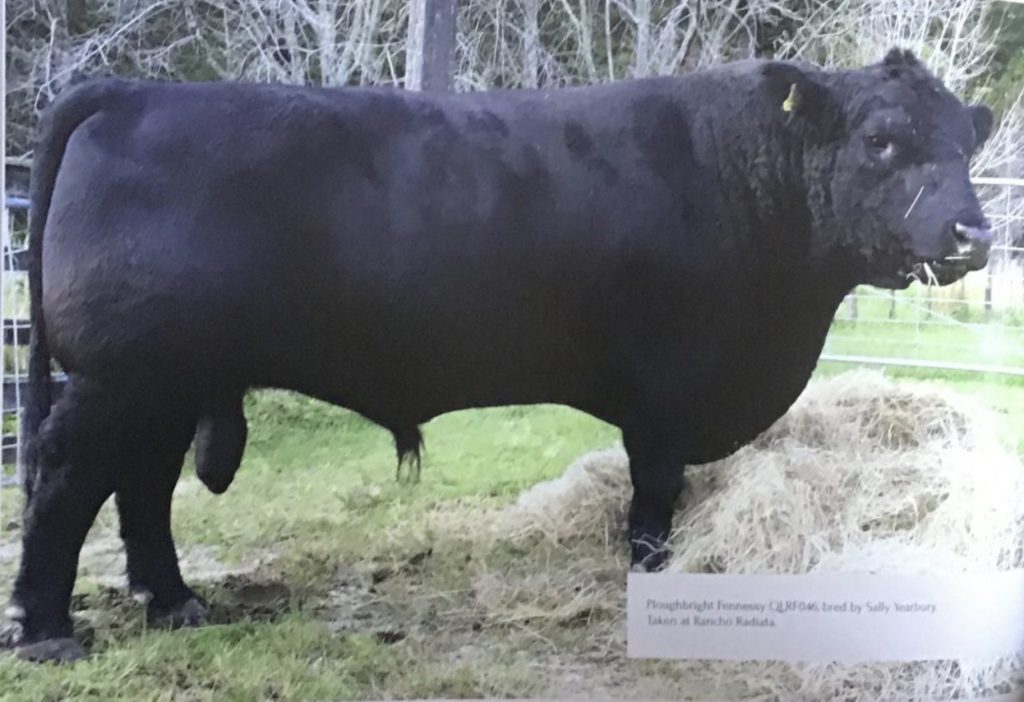
Carcase quality was evident. Growth needed attention.
The Fennessy progeny were lighter than the trial average—490 kg compared with 548 kg at scanning, and 244.4 kg compared with 280 kg in carcase weight. That difference could not be ignored.
However, the same progeny recorded a slightly larger average eye-muscle area, higher intramuscular fat, a higher marbling score and greater rib-fat depth than the trial average.
For Lowland Park, the lesson was clear: moderate-frame Australian Lowlines can contribute valuable muscling and carcase-quality traits, but those qualities must be combined with deliberate selection for growth and commercially useful mature size.
Finishing age matters
The cattle in the 2021 trial cohort were processed at an average age of 897 days—approximately 29½ months. Because every sire group was taken through to a broadly similar age, the trial did not test whether the earlier-maturing Fennessy progeny could have reached a suitable finishing point sooner.
Their greater fat depth and marbling are consistent with earlier maturity, but the trial was not designed to establish their optimum processing age. Feed intake was also not measured, so no conclusion about feed efficiency can be drawn from these results alone.
At Lowland Park, this has reinforced the importance of finishing cattle when they are ready rather than at one common age. Our records show that Australian Lowline × dairy crossbreds can be finished from 18 months, aided by hybrid vigour. This statement applies to the crossbreds—not to purebred Australian Lowlines.
How Lowland Park has responded
At Lowland Park, our objective is not simply to breed small cattle. We aim to retain the Australian Lowline’s moderate frame, calving ease and carcase quality while building the growth and productive capacity required for commercial beef production.
The trial findings have strengthened the way we select cattle:
- We record weights at known ages and monitor growth throughout an animal’s development.
- We aim for replacement heifers to approach 400 kg by 24 months before calving.
- Young bulls must demonstrate strong post-weaning growth; pedigree or appearance alone is not enough.
- Carcase quality remains important, but it must be supported by adequate liveweight and carcase yield.
- Feet, structural soundness, fertility and temperament are considered alongside growth.
- Lowline × dairy crossbreds and purebred Lowlines are assessed separately because they grow and finish differently.
These are Lowland Park’s breeding priorities for our environment and markets. Other Australian Lowline herds may quite properly select for different purposes.
Measured—not assumed
The independent trial provides an external reference point, but our day-to-day breeding decisions are supported by records collected within the Lowland Park herd. We weigh cattle at known ages, monitor hip height and growth patterns, record fertility and structural observations, and use carcase-scanning information where it is available.
Lowland Park Tassie, Ultimate and Uprising each recorded 730-day weights exceeding 500 kg. Their performance shows us that useful growth can be achieved within a moderate Australian Lowline frame when the right genetics are identified and retained.
These records do not prove that every Australian Lowline will perform in the same way. They allow us to make better mating and selection decisions—and to measure whether each generation is moving closer to our objectives.
The opportunity in dairy beef
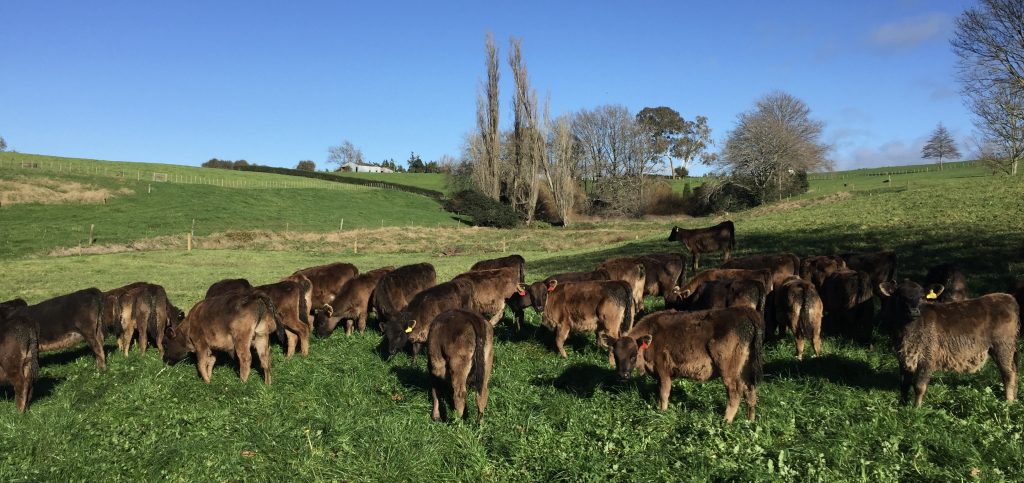
Lowland Park began using Australian Lowline bulls over Jersey heifers in 2016 because calving ease was the first priority. That experience showed us the breed’s potential in dairy-beef systems, but the progeny trial made another point equally clear: producing a live calf is only the beginning.
A commercially useful dairy-beef sire must also contribute growth, sound structure, carcase weight and eating quality. This is why we are selecting taller, performance-recorded Australian Lowlines rather than assuming every animal in the breed is equally suited to the role.
The Lowline × dairy crossbred combines the sire’s moderate frame and carcase traits with hybrid vigour from the dairy dam. Under our conditions, selected crossbreds have demonstrated the ability to finish from 18 months while retaining the calving ease that first drew us to the breed.
Turning evidence into progress
The trial represented one Australian Lowline sire and a relatively small progeny group. It cannot define the performance of an entire breed, but it provided an independent benchmark that had not previously been available in New Zealand.
Fennessy’s inclusion in the trial gave breeders evidence of both the opportunities and the limitations. At Lowland Park, it confirmed valuable carcase traits, exposed the importance of growth and processing age, and sharpened the objectives of our breeding programme.
We see the trial as a beginning rather than a conclusion. Progress comes from measuring honestly, retaining the cattle that meet their purpose, and continuing to test whether each generation performs better than the one before it.