Addicted to Lowlines—how it all began
Lowland Park Lowlines—our story
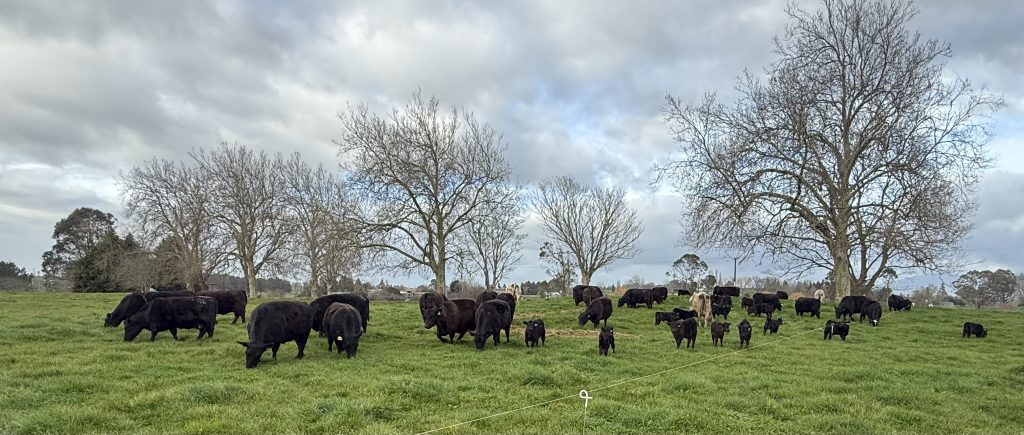
Matt and Tania are fourth-generation farmers on their family farm at Rukuhia, in the Waikato region of New Zealand’s North Island.
In 1991, at the age of 21, Matt took over the family farm. The original 40 hectares had been purchased in the 1920s after his great-grandfather sold his esteemed herd of pedigree Jersey cows, which he had been sharemilking at Pukekohe.
The proceeds funded the purchase of three adjoining 40-hectare blocks. Each was developed as a dairy farm for one of his three sons, including Matt’s grandfather.
Several generations followed by milking cows, including Matt and Tania. They continued dairying until 2019, shortly before both turned 50, by which time more than 30 years of putting cups on cows had taken its toll.
Discovering Australian Lowlines
After years of experimenting with beef sires over our Jersey dairy cows—and experiencing repeated calving difficulties and the resulting loss of cows—we became interested in finding a safer alternative.
In 2015, we tried a Lowline bull on a very small scale over three Red Devon cows. The following year, we began using Lowline bulls over Jersey heifers.
The promise of easy calving proved to be well founded.
Until the dairy herd was sold, we bred and reared many Lowline × dairy calves. Rather than selling them as young calves, we retained them through to processing. This allowed us to see how the cattle performed beyond calving and gave us an enduring interest in growth, finishing ability and carcase quality.
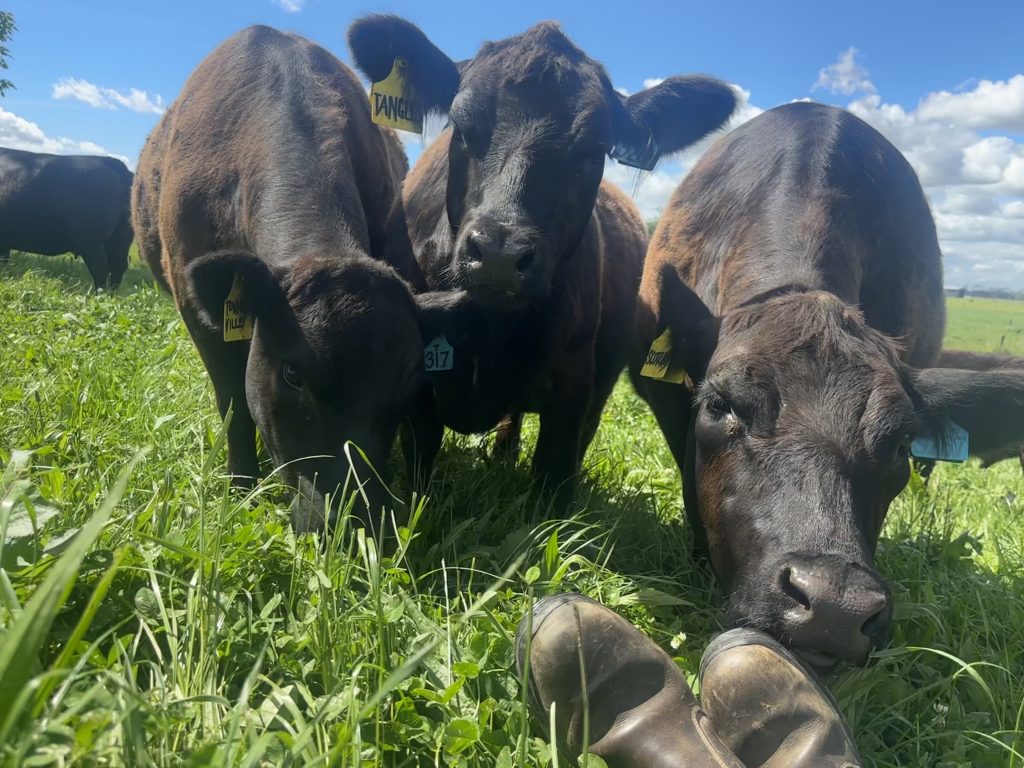
In the winter of 2017, we purchased our first four registered Australian Lowline cows from Hermits Hill Stud at Warkworth. We already had Rancho Radiata bulls and wanted to begin breeding our own Lowline sires for use over dairy cattle.
That was when an interest became an addiction.
From the beginning, Matt was fascinated not only by the cattle themselves, but by the differences between animals—their genetics, growth, structure, temperament and eventual performance.
Developing the foundations for our purpose
We are not trying to reinvent the Australian Lowline or tell other breeders what their cattle should be.
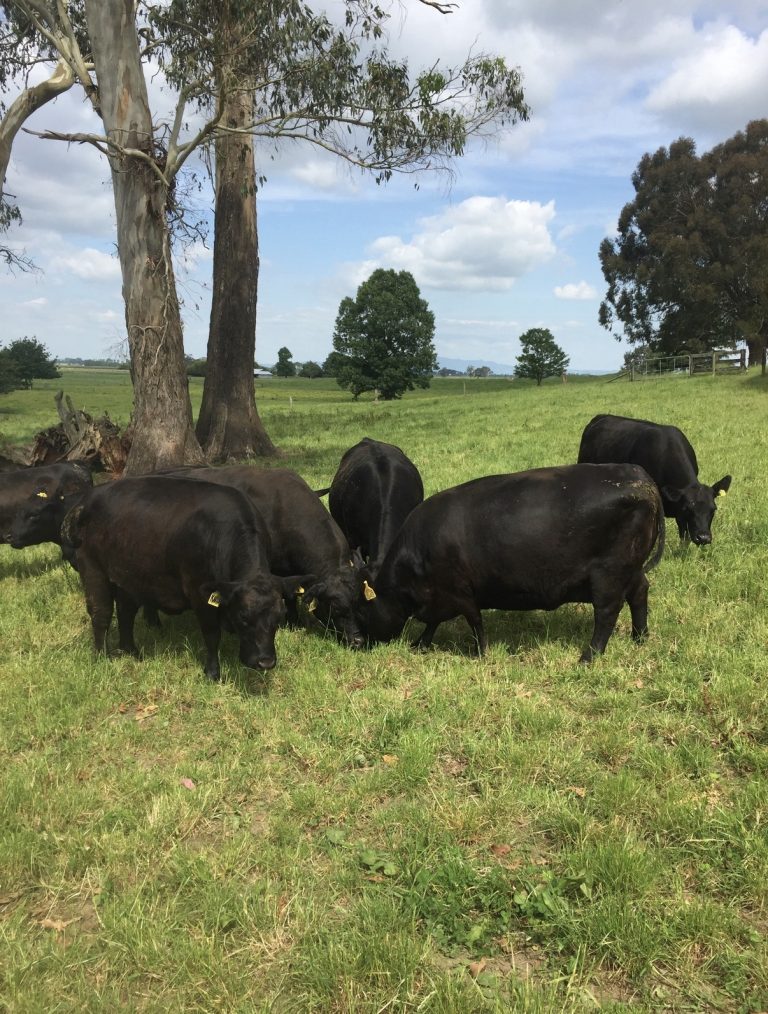
The breed already provides an exceptionally valuable foundation: moderate mature size, calving ease, docility, fertility and high-quality beef. Our purpose is to retain those qualities while developing the growth, structure and productive capacity needed for our grass-based environment and beef markets.
For Lowland Park, breeding moderate-framed cattle does not mean pursuing smallness for its own sake. It means finding cattle that remain moderate while growing efficiently, reproducing reliably, walking on sound feet and producing worthwhile beef.
That requires more than choosing cattle by pedigree or appearance.
We record weights at known ages, measure hip height, scan carcase traits and observe fertility, gestation length, temperament, feet, structure and progeny performance. Animals that do not meet our objectives are not retained simply because they are registered or come from a valued pedigree.
Our objectives continue to evolve as the evidence grows.
Measured, not assumed
We do not pretend to have all the answers.
We are surrounded by a heck of a lot of people who know more than we do about different parts of cattle breeding and beef production, and we are happy to keep learning from them.
Some matings work particularly well. Others expose weaknesses or fail to produce what we expected. Both outcomes are useful when they are recorded honestly.
We use our results to make the next breeding decision, not to declare that every Australian Lowline will perform in the same way. Purebred Lowlines and Lowline × dairy crossbreds are also assessed separately because their growth and finishing patterns are different.
Our cattle are being developed for our environment, our markets and our purpose. Other Australian Lowline herds may quite properly select for different objectives.
Why we share what we are learning
We have quietly shared our cattle and farm life through the Lowland Park Beef Facebook page since 2016. This website allows us to explain the work in greater depth and place the photographs alongside the measurements, results and lessons behind them.
Lowland Park genetics are sometimes available, but selling cattle is not the main reason for sharing this work.
We want to encourage interest—in the cattle, in performance recording, in practical beef production and in the future of the Australian Lowline breed.
If something on this website prompts another breeder to measure more carefully, question an assumption, share an experience or see a new possibility for Australian Lowlines, then the website has achieved something worthwhile.
We believe the future of the breed will be strengthened by curious, engaged people sharing credible information—not by any one herd claiming to know everything.
We are still breeding, measuring and learning.
The future is in what the cattle can prove.